
Get to know your union!
Our continuing series in helping you connect with your union.
Jaap Vleugel – Local Consultation Committee
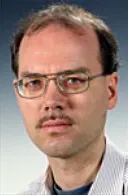
My name is (Dr.) Jaap Vleugel. I have been working at the TUD since 2001. I started as a senior researcher in freight transport at the former OTB Research Institute, known for its very thorough and socially engaged research. This was followed by the T&P department of CEG. There too, I worked in EU-funded projects. After 2 years I became a full-time lecturer in the bachelor (BSA Committee, Minor Integral design of infrastructure and bachelor theses). I have also been coordinating the EngD course Techno-Economic Evaluation for 4 years.
Most of the time is spent on master’s education in the role of coordinator/supervisor and chair of design and graduation project courses. The interfaculty and interdisciplinary Master TIL is the core, followed by education at ME (MME and MTT; external member of graduation committee), Sanitary Engineering (T-E.E.) and City of the Future at Built Environment. I manage the website of the TIL master and provide study advice and policy advice.
Every year, we realise dozens of student projects for commercial companies and sometimes also for (semi-)governments. I am interested in everything related to logistics, sustainability (vehicles, fuels), business process improvement, (spatial) planning and also passenger transport. Direct applicability and societal valorisation is what makes this research attractive.
My work as an executive FNV Education / LO member
Since 2024 I have been a member due to bottlenecks in my work situation. Complaining or walking away does not solve the problem (for others). If you find the work itself appealing, you’ll only be shooting yourself in the foot. I stayed to actively work on improvement together with like-minded people. In the joint local consultation of the trade unions (VLO) we deal with topics that are put forward by members/colleagues, trade union consultants, ourselves, OR/OdCs, SR or the CVB. We operate independently of our (direct) managers and work together with the Executive Board where possible. We do not have a specific division of tasks. We are faced with complex and drawn-out files, of which work pressure, the quality of the organization and management and social safety stand out by far.
What can you talk to my colleagues and me about?
You can share with us everything you encounter in the work situation, provided it is of a professional nature. An example is a difficult relationship with your manager or colleagues. Questions about the application of UFO (University Job Classification) are another example. Work pressure has already been mentioned. We will treat the information provided confidentially. We also refer to specialized colleagues at the trade unions or within this organization.
I am around the meetings with the (V)LO and on request present on the 9th floor in Building 26C room C9.110. You can email me at j.m.vleugel@tudelft.nl.
Works Council Election – Part 2
On October 13 & 14, 2026, there will be elections for 25 seats of the Works Council. The Works Council participates in discussions about decisions of the Executive Board that directly or indirectly affect the interests of the employees.
By Olaf Voorwinde, Manager Operations ME-MSE
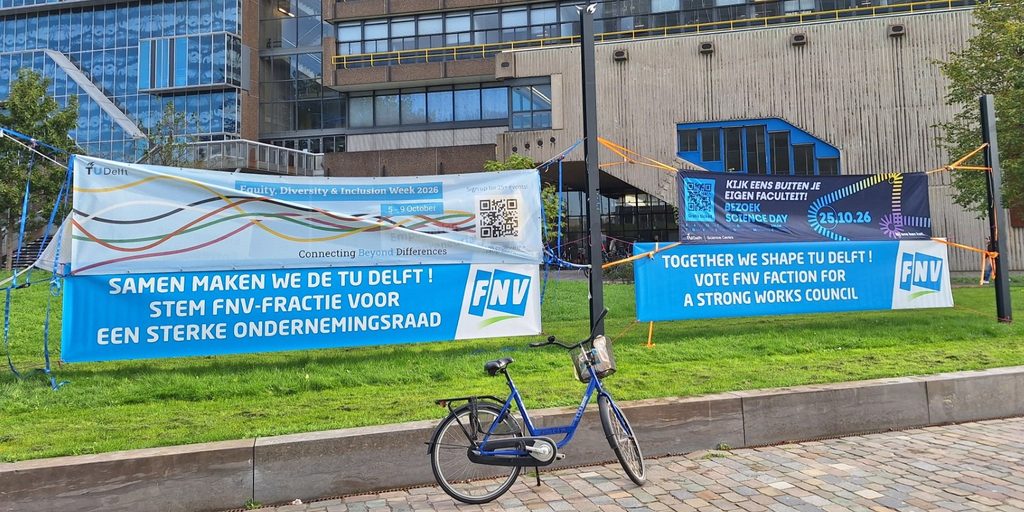
If the Works Council wanted to set spearheads again for the coming parliamentary term of 2026 – 2029, which four would your group put forward for this?
1. Vision on the growth of TU Delft
TU Delft is a highly regarded and successful university. For years, the university has been growing in student numbers and otherwise. In addition, there are expansion ambitions in surrounding cities such as Rotterdam and The Hague. All these activities lead to an increase in workload for scientists and support colleagues. The right balance between ambitions and available colleagues is of great importance for well-being and success.
2. Employee autonomy and growth
A career path has been set out for scientists. The challenge here is to keep the workload and possibilities in a healthy balance. Support functions are very diverse. Career opportunities cannot always be defined in advance. To be able to offer supportive colleagues growth, customization is needed and an organizational culture that facilitates this. We are not there yet.
3. Digital autonomy, data protection and privacy
Recent geopolitical developments show that we cannot blindly rely on countries with a different vision of democracy and the rule of law for all kinds of services and products. Similarly, we must be able to fall on digital services as providers within the European Union.
4. Diversity, Equity, and Inclusion
The diversity of people on campus is a given. Creating an inclusive work environment not only benefits staff and students, but also strengthens the quality of research and education. It is precisely by bringing together people with different backgrounds, perspectives and experiences that more room is created for creativity, innovation and critical thinking. In tackling major societal challenges, such as sustainability, an ageing population and increasing inequality, diverse teams are also more likely to lead to solutions that are better suited to the needs of a broad and diverse society. Inclusion is therefore not only a social value, but also a prerequisite for excellent education, research and social impact.
Who are the FNV candidates for the Works Council election?
- Ronald Kuil
- Claudia Werker
- Roy Amirullah
- Fatma Tanis
- Hendrik Ploeger
- Ivan Nevzgodin
- Robert van der Vlies
- Kees Kerkhoven
- Olaf Voorwinde
- Fabio Luelmo
Where can I find more information about the Works Council and the election?
Are you curious about what the Works Council does? You can find it here on the intranet. Voting will take place on 13 & 14 October 2026, information about the participants on behalf of FNV and the voting itself can be done with your NetID here: https://stem.tudelft.nl/
Get to know your union!
Our continuing series in helping you connect with your union.
Fabio Luelmo – Local Consultation Committee
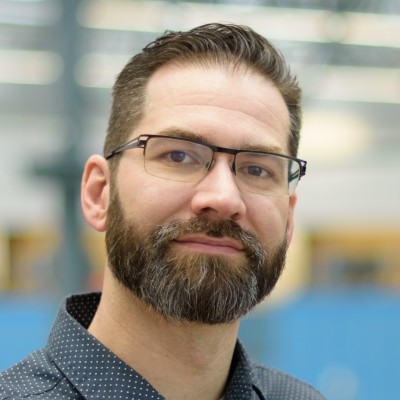
My name is Fabio Luelmo, I have been working at ESA-Central for 5 years as a project manager, specializing in lecturer services, and recently became team leader of Teaching-Support, the portal for all education-related services for our lecturers. I became active in the trade union movement 2 years ago and since 1 May 2026 I have been the deputy chair of the Trade Unions of the Local Consultation (VLO) at TU Delft.
What is the Local Consultation (LO)? In the LO, representatives of the employer (the Executive Board) and of the trade unions (AOb, CNV and FNV: together the VLO) discuss topics in a partially-open forum, in accordance with the Collective Labour Agreement for Dutch Universities, which relate to personnel policy, social safety and the working conditions of the university. My FNV colleague Jaap Vleugel and I look for a lot of cooperation with the other trade unions of the VLO, where the relationship is very good. As a result, all union members at TU Delft benefit!
A side issue for me and Jaap is representing TU Delft in the LAC-WO (National Advisory Committee on Scientific Education of the FNV). This is the collection of FNV Local Consultation members of all universities, and the FNV negotiators and administrators. They discuss developments in university education and coordinate what can be done from the FNV. I am also involved in other FNV work, for example managing the website “FNV @ TU Delft” and mobilization of members.
Why do I put my time into this?
I believe in workplace democracy and that the mission of the university can only be achieved with a strong participatory voice of employees. I am also passionate about workers’ rights and building a safe, sustainable and productive work environment.
In addition to my work, I live in Wassenaar with my wife, two children and three cats. I like to play Dungeons & Dragons the old-fashioned way with lead and paper, and I also teach medieval swordfighting in The Hague at Steelbound. I am very accessible about my work, trade union affairs or hobbies! Feel free to email me on f.a.j.luelmo@tudelft.nl .
Works Council Election – Part 1
On October 13 & 14, 2026, there will be elections for 25 seats of the Works Council. The Works Council participates in discussions about decisions of the Executive Board that directly or indirectly affect the interests of the employees.
By Olaf Voorwinde, Manager Operations ME-MSE
What is the most important thing that the Works Council has achieved in the past period, according to the FNV faction?
Budgetcuts, workload and campus strategy
Due to (geo-) political developments, TU Delft’s finances are under pressure and there are austerity plans until 2029. This is at odds with the (growth) ambitions of TU Delft. There are in-depth discussions with the Executive Board about how these changes will be tackled and there are agreements about monitoring them with regard to finances, but above all what this means for colleagues in terms of workload and job security.
Social and physical safety
Social safety has been high on TU Delft’s agenda in recent years. After a critical report by the Education Inspectorate, work was done on a revised integrity system and a new code of conduct. Physical safety was also given attention. Both themes remain important, because policy ultimately has to prove itself in the workplace.
Diversity, equity and inclusion
We drew attention to diversity and inclusion, because respectful interaction with people from different backgrounds contributes to a socially safe working environment. In addition, we will continue to work for an independent and visible DEI Office, with a firm anchoring within faculties and departments.
Campus strategy
With TU Delft’s growth ambitions come many wishes and plans for expanding the campus. This is at odds with the financial possibilities and maintenance and investments in existing buildings. There have been sessions and discussions with the Executive Board to find the right balance.
What is FNV committed to?
The FNV is the warm heart of the Works Council. We pay attention to an inclusive and safe working environment, the proper functioning of the organisation and the proper organisation of the university’s core tasks (education, research and valorisation), also in the context of TU Delft’s long-term strategy, including in the ambition of Campus Rotterdam and other partnerships.
With our roots in the trade union FNV, we have short lines of communication to the negotiating table where our collective labor agreement between the unions and the Universities of the Netherlands are negotiated. Moreover, we are the only trade union with an office on campus where you can fall back on the experience, knowledge and clout and short lines of communication with other bodies, where the interests of our colleagues are represented.
In follow-up newsletters, we will present ourselves with members who have nominated themselves for election to the Works Council.
Do you want to be in the Works Council?
If you want to put yourself forward as a TU Delft Works Council candidate with FNV, you still can! Simply e-mail FNV@TUDelft.nl and we will help set you up. The deadline is 11 September 2026.
Diversity, Equity & Inclusion
By Kees Kerkhoven & Claudia Werker
A theme of crucial importance to the Works Council
Diversity, inclusion, and equity are major themes in TU Delft’s policy. It is often referred to by the abbreviations DIE or DEI. We see this in practice on campus through the all-gender toilets and reflection rooms. There is also a lot of attention for gender equality, and the Progress flag flies prominently in front of the Aula every day.
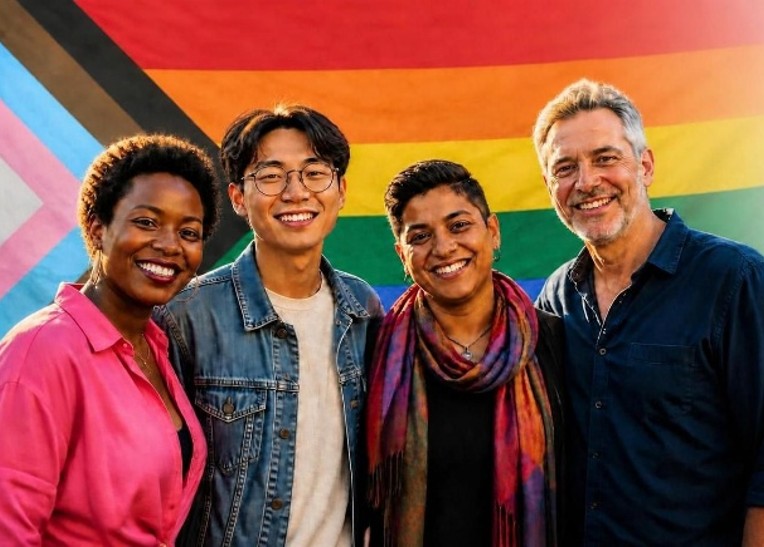
At the same time, not enough attention is given to the interests of those who are limited in their work or study on campus due to a disability or chronic illness. Recently, the Student Council and the Subcommittee for University Services have, separately, urged the Executive Board to pay more attention to this.
Another part of DIE is treating each other equally. The investigation by the Education Inspectorate focuses, among other things, on disadvantages within the TU. In 2025, the national House of Whistleblowers had seen a 50% increase in reports of abuse at work, of which 90% concern prejudices. So, this is a very common problem. This does not mean that prejudice is ‘normal’, but that a clear position must be taken against it.
The FNV wholeheartedly supports these initiatives for greater equality. DIE is also a theme that the FNV is campaigning for nationally, as you can read at FNV.nl/actie. The FNV faction in the Works Council also ensures that this theme remains high on the board’s agenda. Your membership of the FNV helps us to do this within TU Delft and nationally on behalf of a broad constituency.
Get to know your union!
Our continuing series in helping you connect with your union.
Gisela Wubben – Union sector consultant

My name is Gisela Wubben and I have been working for the TU in the finance department for over 33 years, and I have also been a member of FNV for almost that long. For many years I helped fellow members with tax returns for the FNV, unfortunately I had to stop this a few years ago because I was quite busy at the time.
Fortunately, this very busy period has been over for a while and when I was asked more than 2 years ago if I would like to follow certification for union consultant. I did not have to think about it for long and I started the training in January 2024. In March 2024 I certified as a general consultant and because I had been in this position here at the TU for several months, I started in April. In June 2024, I completed the last part of the training and am now an official union sector consultant and can therefore carry out the tasks that come with this.
What does a union sector consultant do?
The most important thing is that you can contact me with questions relating to the work here at the TU. If I can answer them for you, I will do so, if it concerns a legal issue I will ensure that it ends up with our lawyers, provided you have been a member for some time.
As a sector consultant, I can also be an observer during conversations, for example with HR or your manager, after we have prepared this well in advance. I will stop when the question has been answered, the problem has been resolved to your satisfaction, or it has been referred to the legal department.
Every Tuesday you can find me on the 9th floor in Building 26C room C9.130, I am there from 11:00 am or email me FNV@tudelft.nl . If you have any questions about the TU, please contact us and we will work together to find an answer.
Get to know your union!
Our continuing series in helping you connect with your union.
Zoë Gromotka – Union Officer
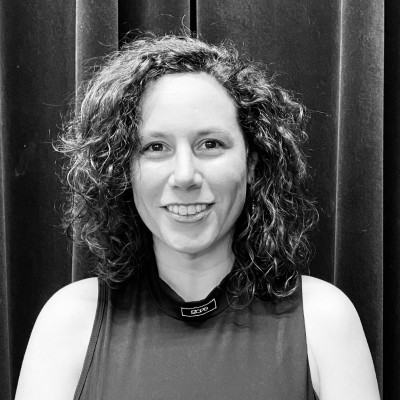
My name is Zoë Gromotka, and since last March, I have been a union officer at TU Delft on behalf of the FNV. I got to know TU Delft both as a student and as an employee. I completed my bachelor’s and master’s degrees in applied mathematics here. Subsequently, I did a PhD program at Ghent University, where I discovered my passion for education. Since August 2022, I have been back as a lecturer at the Delft Institute of Applied Mathematics (DIAM), providing interfaculty mathematics education throughout the entire TU.
The education budget cuts and the subsequent strike brought me into contact with FNV and its presence at TU. I was inspired by the dedication of the steward-members and saw how important a visible union is at the university. Because the position of union officer had been vacant for some time, I decided to take the step and contribute personally to strengthening the union at TU.
What does a union official do?
As a union official at the FNV, I organize actions, campaigns, and demonstrations to mobilize employees on issues such as working conditions, workload, and social security. I maintain contact with work-councils and union officials, gather feedback from the work floor, and determine the strategy for campaigns and negotiations together with active members.
Additionally, I organize meetings, engage in dialogue with employees on the work floor, recruit new active members, and guide teams of volunteers and union officials. Setting up public campaigns and press events is also part of my duties, with the aim of making the voice of employees visible and influential.
I look forward to working with members and steward-members on a strong, visible union that stands up for the interests of all TU Delft employees.